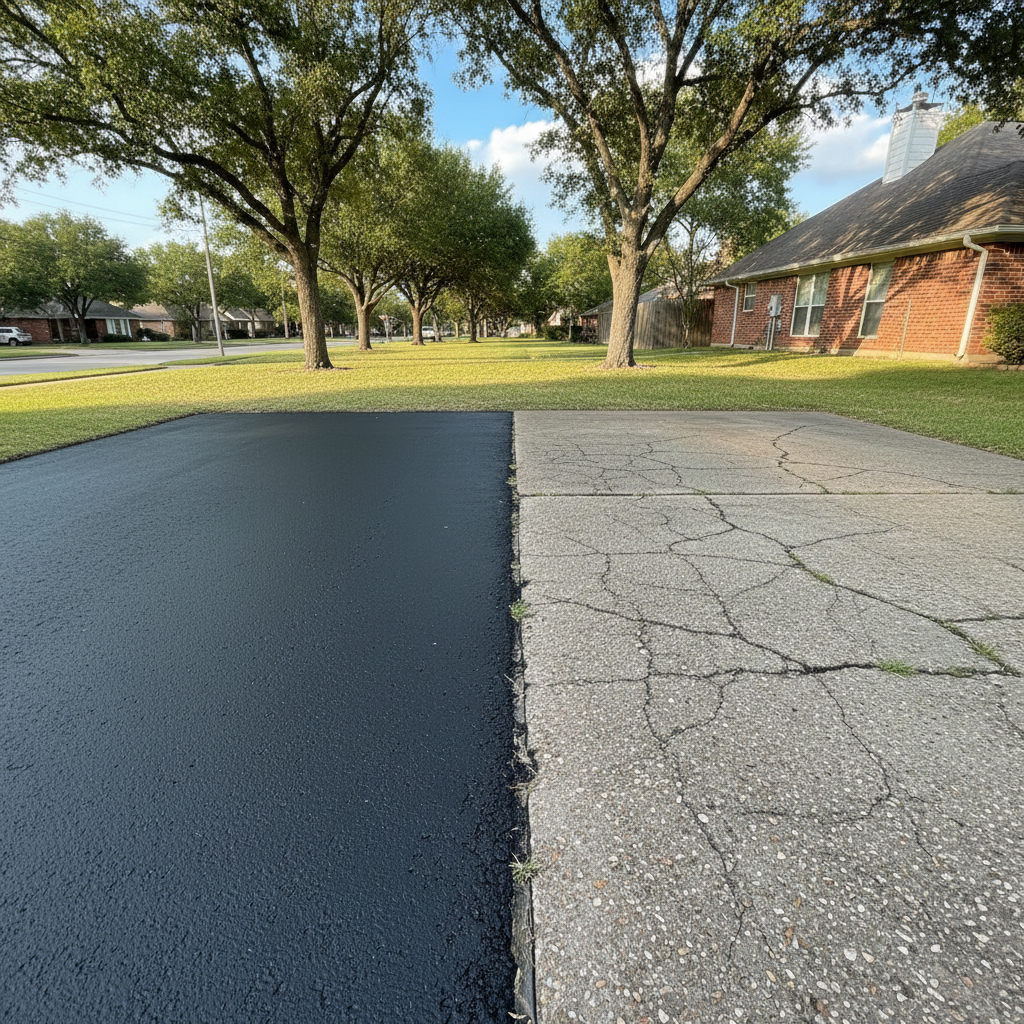
Your asphalt driveway is looking a little rough, isn't it? Maybe you've got some spiderweb cracks spreading, or a pothole that just keeps getting deeper every time it rains. I see this kind of thing all the time here in Houston. Homeowners often ask me, "Can we just patch it, or do we need to do the whole thing over?" It's a fair question, really, and the answer isn't always simple. But I can tell you what I've picked up over years of working on driveways and parking lots in places like The Heights and River Oaks.
Patching: The Quick Fix
When we talk about patching, we're generally focusing on specific, isolated spots that are damaged. Think potholes, small cracks, or sections where the asphalt has started to fall apart. There are a few ways to patch, but for most homeowners, we use what's called a 'cut and patch' or 'remove and replace.' Basically, we cut out the bad section, dig down to the base to make sure it's solid, and then fill it with new asphalt. For smaller cracks, sometimes we'll just use a crack filler. That's more about sealing the crack to keep water out.
The Good Side of Patching:
- Cost: This is usually the biggest reason people choose it. Patching is almost always cheaper upfront than resurfacing because you're only paying for materials and labor for a small area.
- Speed: A patch job can often be done in a single day, sometimes even just a few hours, depending on how big or complicated it is. You'll get your driveway back much faster.
- Targeted Repair: If 90% of your driveway is in great shape, and you just have one bad spot, patching makes perfect sense. Why fix something that isn't broken?
The Downside of Patching:
- Appearance: Let's be honest, patches rarely blend in perfectly. You'll probably see the seams, and the new asphalt might look a different shade than the old, especially if your driveway is aged and faded. It's kind of like putting a band-aid on a wound—it covers it, but you can still tell it's there.
- Durability: A patch is only as good as the asphalt around it. If the rest of your driveway is weak, cracked, or has a failing base, new problems are going to pop up right next to your patch. You could end up constantly fixing things, patching one spot only to have another fail a few feet away a year later.
- Temporary Solution: In many cases, patching is just a temporary fix. It'll extend your driveway's life for a bit, but it doesn't really deal with any underlying issues or give you a fresh start.
Resurfacing: The Fuller Solution
Resurfacing, also known as an overlay, is a more complete approach. This is when we put a new layer of asphalt right over your existing driveway, assuming it's still structurally sound. Before we do that, we'll clean the surface, fix any major cracks or potholes (we call these 'base repairs' in this context), and then apply a tack coat to help the new layer stick. Then, we lay down a fresh layer of hot asphalt, usually 1.5 to 2 inches thick, over the whole thing.
The Good Side of Resurfacing:
- Appearance: This is where resurfacing really shines. You get a completely fresh, uniform, smooth surface that looks brand new. It instantly boosts your home's curb appeal, no doubt about it.
- Durability: If your existing base is still good, a new layer of asphalt significantly extends your driveway's life. It's a fresh wear course that can handle the Houston heat and those sudden, heavy rains much better than an old, worn-out surface.
- Addresses Minor Imperfections: The new layer can smooth out minor dips and bumps that patching wouldn't even touch.
- Long-Term Value: While it costs more upfront, a well-done resurface can last 10-15 years or even longer with proper maintenance. Often, that makes it a better long-term investment than constantly patching.
The Downside of Resurfacing:
- Cost: It's a bigger investment than patching, for sure. You're covering the entire area, so material and labor costs are higher.
- Time: Resurfacing takes longer, usually a few days from start to finish, and you'll need to stay off it for a bit longer to let it cure properly.
- Not for Severely Damaged Bases: If your driveway has extensive, deep cracks, alligator cracking over a large area, or serious drainage issues, resurfacing might not be enough. That usually points to a failing base layer, and then you're looking at a full 'remove and replace' project, which is even more involved.
What I Recommend for Houston Homeowners
Here in Houston, our soil conditions can be tricky. We've got expansive clay soils that shift with moisture changes, and that puts a lot of stress on asphalt. Plus, the intense summer heat and sudden downpours don't do any favors for aging pavement. Because of all this, I often lean towards resurfacing if your driveway shows widespread signs of wear, even if the damage isn't totally catastrophic yet.
Now, if you've got just one or two isolated potholes, especially if the rest of the driveway still looks pretty good and is less than 10-12 years old, then a targeted patch job from Pacific Asphalt Inc. can definitely buy you some time. But if you're seeing cracks all over, multiple small potholes, or spots where the asphalt is thinning and you can see the aggregate underneath, you're probably past the point where patching is a smart long-term move.
Think of it this way: patching is like putting new tires on a car with a failing engine. It'll get you a bit further, but you're still going to have bigger problems down the road. Resurfacing, on the other hand, is more like getting a new engine—it gives the whole vehicle a new lease on life.
Ultimately, the best way to know is to have someone take a look. We can come out, assess your driveway's condition, and give you an honest opinion on whether a patch or a full resurface makes the most sense for your specific situation and budget. Don't wait until those small cracks turn into big headaches, okay?