Is That Pothole a DIY Job or a Pro Project?
So, you've spotted a crack in your driveway, maybe even a little pothole starting to show up. Your first thought is probably, "Can I just fix this myself?" That's a fair question, and honestly, the answer is "it depends," like with most things. As an asphalt contractor who's been paving all over Houston for years, I've seen folks try all sorts of fixes. Some work out, some don't, and some actually cost more down the road. Let's chat about what you can realistically tackle yourself and when it's really time to pick up the phone.
Before You Start: Check Out the Damage
Before you even think about grabbing a bag of cold patch, take a good, hard look at what you're up against. This step is super important for figuring out what to do next.
- Small cracks (1/4 inch or less): These are usually just on the surface. You can often seal them up with a decent crack filler. The goal here is to stop water from getting in and making things worse.
- Larger cracks or spiderwebbing: If cracks are wider than a quarter-inch, or if you see a network of cracks that looks like a spiderweb (we call that alligator cracking, by the way), you're probably dealing with more serious damage. This usually means the base layer underneath isn't doing its job anymore.
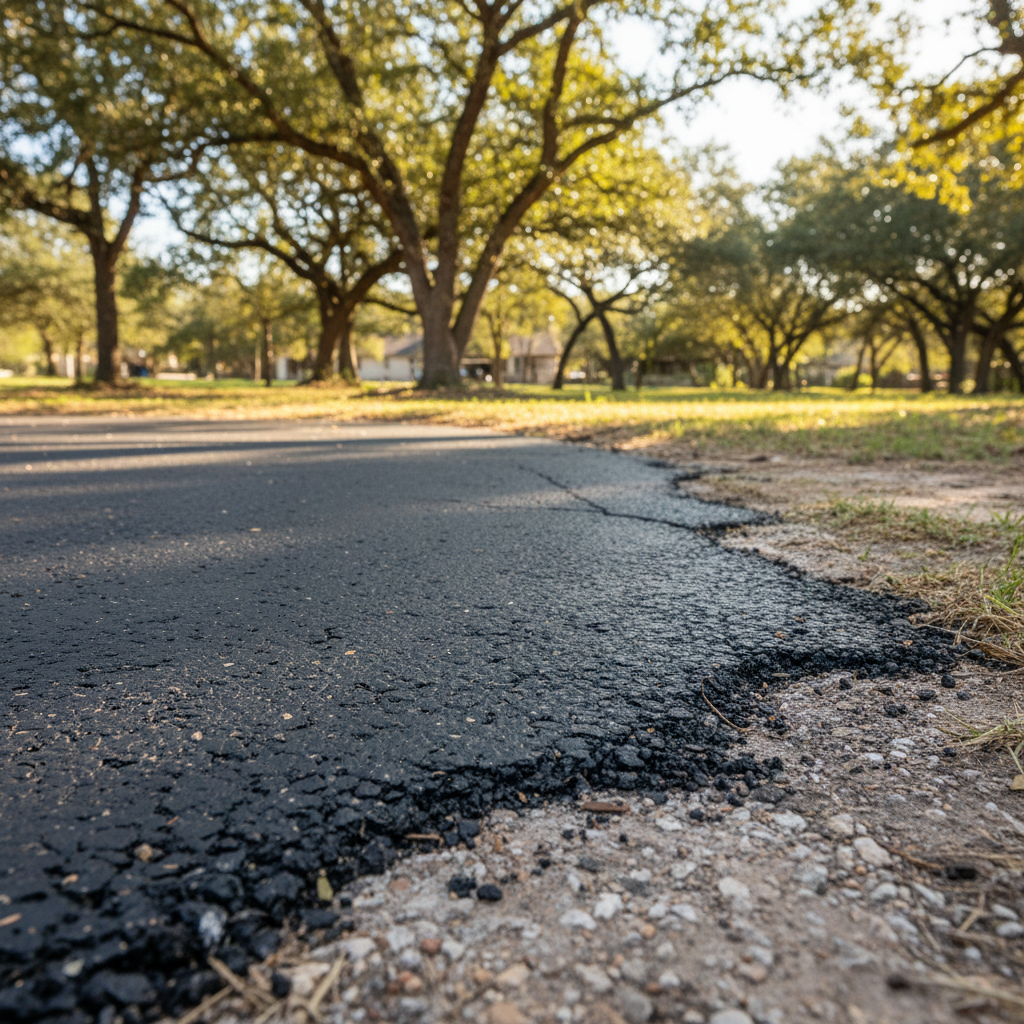
- Potholes: A pothole means the asphalt has completely given out in that spot. This often happens because water got in and froze/thawed – though we don't get much freezing here in Houston, water still erodes the base plenty.
- Depressions or Sinking Areas: If parts of your driveway are sinking, that's a big red flag for a serious problem with the sub-base. Just patching the top won't fix the real issue.
For those tiny cracks, you can definitely handle it yourself. Just head to your local hardware store, grab some good quality asphalt crack filler (the kind in a caulk tube works for smaller stuff, or pourable for longer, thin cracks), and follow the directions. Make sure to clean the crack really well first – get all the dirt and debris out. A wire brush and a leaf blower are fantastic for this.
When to Call a Pro (Like Pacific Asphalt Inc)
Here's the deal: if you're looking at anything beyond a few small, isolated cracks, you're probably going to need professional help. Why? Because patching a pothole or a large area of alligator cracking isn't just about dumping some new asphalt on top. It's about really understanding the base, making sure it's compacted correctly, and ensuring the repair actually lasts.
Think about it this way: Houston's soil, especially that heavy clay we find in places like Katy or Cypress, expands and shrinks a lot with changes in moisture. If your base isn't stable, or if water keeps getting underneath, any patch you put on top is just a temporary fix. It'll fail again, probably sooner than you'd like.
Here's when you really should give us a call:
- Potholes larger than a dinner plate: These need proper digging out, a solid base, and hot asphalt for a fix that actually holds up. Cold patch is, at best, a very temporary solution for big holes.
- Alligator cracking: This is a clear sign your base is failing. We'll need to cut out the damaged section, repair the base, and then lay down new asphalt.
- Sinking areas or major depressions: Again, this points to a base problem. We've got the right equipment to properly figure out and fix the underlying issue, not just the surface.
- Multiple, widespread issues: If your driveway looks like a patchwork quilt of problems, it's often smarter in the long run to get a professional assessment and possibly a bigger repair or even a full resurface.
The DIY Cold Patch Method (Only for Small Potholes)
Alright, so you've got a small pothole, maybe 12-18 inches across, and you want to try cold patch yourself. Here's how to do it right:
- Clean it out: This step is absolutely critical. Get all the loose debris, dirt, and standing water out of the pothole. A shop vac or a stiff brush works well. You want a clean, dry surface to work with.
- Square it up (optional but a good idea): If the edges are crumbling, use a pickaxe or a chisel to cut the pothole's edges into a more defined, square shape. This gives the patch something solid to stick to.
- Fill it in layers: Don't just dump the whole bag in there. Fill the pothole in layers, roughly 2-3 inches at a time.
- Compact, compact, compact: This is the single most important step, truly. After each layer, compact the cold patch as much as you possibly can. Use a hand tamper, the back of a shovel, or even drive your car over it (slowly and repeatedly) if it's in a spot that allows it. The goal is to get it as dense as possible.
- Overfill slightly: Fill the last layer so it's mounded a little above the surrounding asphalt. As you compact it, it should settle to be flush or just slightly proud.
Just remember, cold patch is really a temporary fix. It's not as tough as hot mix asphalt, which is what we use for permanent repairs. It's great for getting you by for a while, but don't expect it to last for years, especially with our Houston heat and those heavy rains.
After the Patch: Keep an Eye On It
Whether you go the DIY route or call us at Pacific Asphalt Inc, keep an eye on your repairs. For cold patches, you might see some settling or crumbling over time. For professional repairs, though, you should expect it to blend in and hold up. If you notice new cracks forming around a professional patch, definitely give us a call – that's not normal at all.
The main thing is to deal with these issues early. A small crack today can easily turn into a big pothole next year if water gets in there and starts eroding the base. Stay on top of it, and your driveway will serve you well for a long, long time.